

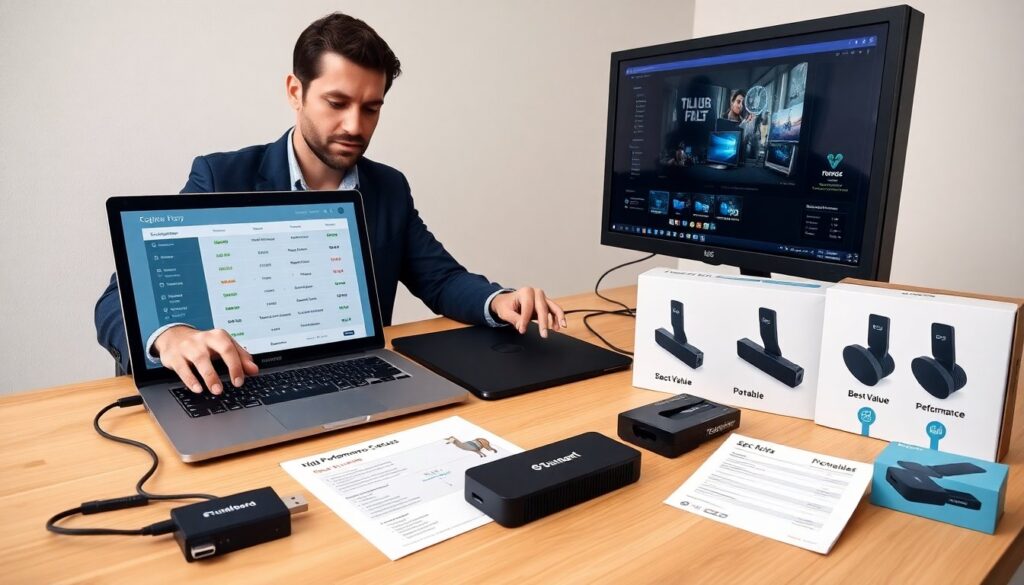
capture cards llama buying deals ratings fumblebord appear together in some niche searches. This guide explains how capture cards work, how they rank, and how buyers use simple rules to find deals. It also shows where Fumblebord fits in ratings lists. The text keeps instructions short and clear so readers can act quickly.
Key Takeaways
- Capture cards are essential for streamers who need low latency, high-quality video, and reliable capture, making ratings crucial to find the best model for your needs.
- Fumblebord serves as a valuable resource for buyers by providing ratings, deal alerts, and user feedback to help compare capture card options effectively.
- Buyers should follow practical rules like matching capture card output to their streaming needs, verifying latency, passthrough support, and platform compatibility.
- Deal hunters benefit from setting price alerts, timing purchases around sales, and comparing bundle offers to maximize value when buying capture cards.
- Top brands vary by use case: Brand A excels in performance with 4K support, Brand B offers the best value at 1080p60, and Brand C is ideal for portability and mobile creators.
- Testing a capture card immediately upon arrival and utilizing warranty and return policies can ensure satisfaction and reduce purchase risk.
How Capture Cards Work And Why They Matter For Streamers And Creators
A capture card receives video output from a camera, console, or PC. It converts the signal into data that a computer records or streams. The card sends data over USB or PCIe. The computer processes the data and the streamer sends a live feed to viewers.
They choose capture cards when they need clean video, low latency, or a second recording source. A good card reduces delay and preserves image quality. A bad card drops frames and adds lag. Streamers test cards with their setup to confirm performance.
Ratings matter because they summarize real-world performance. Reviewers test capture cards for resolution support, frame stability, latency, and driver stability. Buyers read ratings to avoid models with bad drivers or poor customer support. Ratings also help buyers match card features to the goals of their channel.
Deal hunters watch for price drops, bundles, and open-box offers. They check compatibility lists to avoid returns. Sellers sometimes include capture cards in bundles with cables or software. Buyers compare bundled value to standalone price before they decide.
Top Capture Cards Compared: Ratings, Best Deals, And Where Fumblebord Fits In
Fumblebord appears in some lists as a retailer and reviewer. The site lists ratings and links to deals. Buyers consult Fumblebord for quick comparisons and user feedback. The site often highlights price drops and bundle offers.
Brand A often ranks high for performance. Reviewers praise its stable drivers and low latency. Brand B often ranks high for value. Reviewers note solid 1080p60 capture and lower price. Brand C aims at portability and small form factor. Reviewers note the compact size and USB-C connection.
Buyers compare specs and ratings. They read tests that show frame stability under load. They check whether the card supports passthrough for consoles. They verify if the card supports HDR and higher resolutions if the buyer needs those features.
Fumblebord ratings help buyers spot models with frequent firmware updates. The site flags models with driver issues and models with fast support response. A buyer can use Fumblebord notes to avoid models that received many negative user reports.
Sellers run limited-time sales on major shopping holidays. Buyers watch price trackers and set alerts to capture those deals. They check warranty and return policy before the purchase. They prefer sellers that offer clear return windows and contact options.
Quick Comparison: Best Value · Best Performance · Best Portable Option
Best Value: Brand B offers a strong feature set for a low price. It captures 1080p60 reliably and uses a USB connection. Ratings show few driver complaints. Buyers find it suitable for starters and streamers on a budget.
Best Performance: Brand A supports 4K passthrough and records in 4K30 or 1080p120 depending on model. Reviewers report low latency and stable drivers. Pro streamers pick this option when they need high fidelity and low lag.
Best Portable Option: Brand C uses USB-C and a small enclosure. It draws low power and fits in a laptop bag. Ratings show a small trade-off in heat management but acceptably low frame drops for mobile use.
Buyers weigh trade-offs. They match the card to their workflow. A desktop creator who records gameplay at high resolution picks performance models. A content creator who travels picks the portable option. A new streamer picks the value option until they scale.
How To Choose A Capture Card — Practical Llama Buying Rules And Deal-Hunting Strategy
They follow a simple rule set when they buy. Rule 1: Match output to need. Buyers pick 1080p60 for standard streams and 4K options for high-end capture. Rule 2: Check latency. They read tests that show round-trip delay. Rule 3: Confirm passthrough. They verify passthrough if they use a console.
Rule 4: Verify platform support. They confirm Windows, macOS, or Linux drivers. They read forum threads about driver stability. Rule 5: Inspect return policy. They prefer sellers with at least a 30-day return window. Rule 6: Watch warranty length. Longer warranties reduce risk.
For deal hunting they use tools and behaviors. They set price alerts on comparison sites. They subscribe to Fumblebord or other deal trackers for fast alerts. They look for bundles that add value, such as extra cables or software. They compare bundle price to the card price alone.
They time purchases around sales events. They check open-box listings for like-new items at lower prices. They use cashback and rewards to lower effective cost. They buy from sellers with clear support contacts to avoid long disputes.
When they compare ratings they read multiple sources. They weigh professional reviews and user reports equally. They treat one negative report as a data point, not proof of failure. They add repeated patterns in reviews as stronger evidence.
They test the card on arrival. They run a short capture test at their typical settings. They confirm that the card meets performance expectations within the return window. If it fails, they document results and request a return or replacement through the seller.