

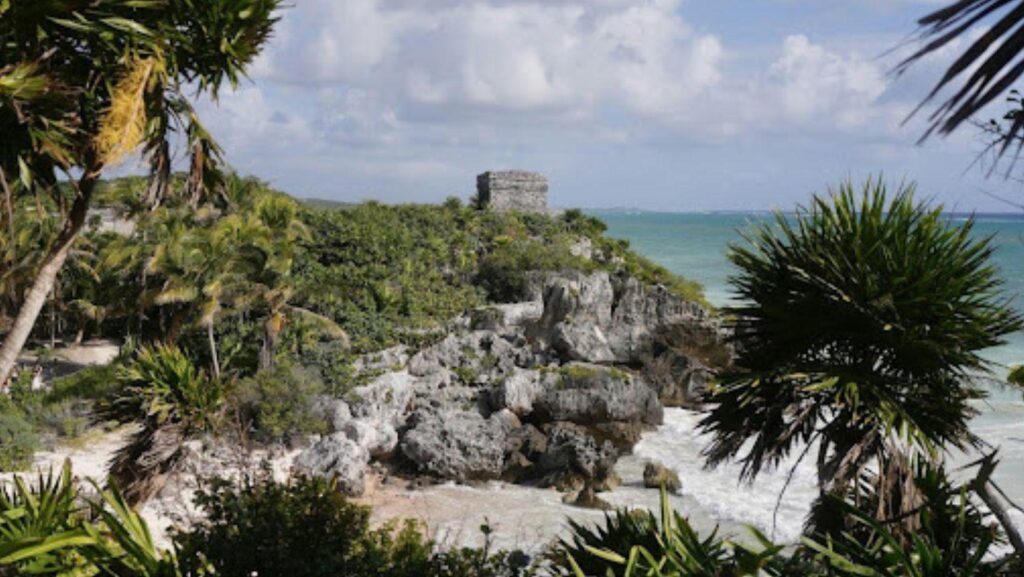
The Maya once called Tulum Zamá, a word for dawn, yet the ruins open at 8:00 a.m., and on both the longest and the shortest days of 2026 the sun clears the sea before the gates do (INAH, 2026, and Sunrise-Sunset.org, 2026). That one detail sums up Riviera Maya photography: the light is superb, and it keeps its own schedule. This stretch of Mexico’s Caribbean coast runs south of Cancun through Puerto Morelos, Playa del Carmen and Akumal to Tulum, and all of it faces east. Plan dawn from a beach, the ruins at first entry, cenotes at midday and the streets after dark, and one week of Riviera Maya photography covers ruins, reefs, jungle and street life.
Key Takeaways
- The coast faces east, so the sun rises over the sea and sets behind you over the jungle.
- Tulum’s ruins open at 8:00 a.m. with last entry at 3:30 p.m., so shoot sunrise from a beach instead.
- Save the harsh midday hours for cenotes, where beams of light fall through openings in the rock.
- December to April is the dry season, and the Atlantic hurricane season runs from June 1 to November 30.
- Let a cold camera warm up inside a sealed bag, so condensation forms on the bag instead of your lens.
Riviera Maya Photography Starts With the Light
The sea is your eastern horizon everywhere on this coast. If you want the sun coming up over the water, you only need to walk down to the beach. Sunset happens behind you, over flat jungle, so evening frames work best on subjects lit from the west, such as ruins, streets or a hotel pool.
|
Date in 2026 |
First light |
Sunrise |
Sunset |
|
June 21 |
5:44 a.m. |
6:07 a.m. |
7:33 p.m. |
|
December 21 |
6:56 a.m. |
7:19 a.m. |
6:14 p.m. |
Those times come from Playa del Carmen’s 2026 tables (Sunrise-Sunset.org, 2026). In June you get 13 hours and 25 minutes of daylight, and in December just under 11 hours, so a winter trip squeezes golden hour into fewer, busier windows.
The midday sun is hard on white sand, which throws light back at the camera. Use those hours for shade and water. A polarizing filter earns its place in the bag here, because it cuts glare on the sea and deepens the blue of the water and sky.
Plan the Season Around Weather and Sargassum
The dry season runs from December to April, according to Mexico’s protected-areas agency, while July and August are the hottest months (CONANP). Clear skies and low humidity make those winter months the easiest for landscapes and night shots.
Summer and early fall bring heat, rain and storms. The Atlantic hurricane season runs from June 1 to November 30 (National Hurricane Center). A storm can close roads and ports for days, so leave spare days if you travel then.
Seaweed is the other variable. The University of South Florida’s August 2026 outlook found sargassum above the 75th percentile of historical levels across most of the region, with beaching continuing into late summer (USF, 2026). The same bulletin expected amounts to keep falling until about November. For a beach shoot, that means checking conditions close to your dates and keeping a second beach in reserve.
The Ruins at Tulum
Tulum’s ruins sit on a cliff above the sea, and INAH, Mexico’s archaeology institute, opens the zone from 8:00 a.m. to 5:00 p.m., with last entry at 3:30 p.m. (INAH, 2026). Be at the gate for opening. The light is still soft, the heat is lower and the paths hold far fewer people than they will by eleven.
The classic frame runs along the cliff edge, with the Castillo above the beach and the sea beyond it. Do not stop there. The smaller temples, the old wall and the iguanas sunning on warm stone make strong detail images, and the morning side-light gives the carvings texture.
Rules for tripods, video and drones are not listed on INAH’s page for the site, so ask at the entrance before you set anything up. A guard’s answer on the day beats a forum post from three years ago.
Why the Dawn Shot Happens Outside the Gates
On June 21, 2026, the sun rises at 6:07 a.m., nearly two hours before the ruins open. Even on December 21 it rises at 7:19 a.m. So the famous sunrise over Tulum’s temples is out of reach from inside the zone during opening hours. Shoot dawn from the coast nearby, then walk into the ruins at 8:00 a.m. for clean morning light on the stone.
Cenotes at Midday
Cenotes are natural sinkholes filled with clear fresh water, and this part of the Yucatan Peninsula is full of them. Open cenotes photograph well from the edge, where you can frame the water, the roots and the swimmers from above.
Cave cenotes reward patience. Look for beams of light falling through openings in the rock, which are strongest when the sun is high, around the middle of the day. That makes cenotes the natural home for the hours the beach looks flat. Raise your ISO, brace against a rail or a rock, and expose for the beam so the shadows stay dark.
Bring a waterproof housing or an action camera if you want to shoot while swimming. Rules differ from one cenote to the next, so ask at the entrance about cameras, tripods and sunscreen before you pay.
Akumal and the Coast’s Wildlife
Akumal is known for green sea turtles that feed on seagrass close to shore. Treat them as wild animals on their own time. Keep your distance, never touch or chase a turtle, and follow the instructions of any guide or ranger on the beach. A wide lens and a steady float give better results than swimming closer.
On land, look for coatis near the ruins and the frigatebirds that glide above the coast. Tulum’s national park lists sea turtle nesting among its activities (CONANP), so if you visit in season, keep to marked paths and keep your flash off near the sand. A zoom lens does the rest.
Streets of Playa del Carmen and Tulum Town
Playa del Carmen’s Fifth Avenue is a long pedestrian street full of color, music and people, and it comes alive after sunset. It is a good place to practice street photography with a small camera or your phone, because a big lens draws attention in a crowd.
Tulum town and the older parts of Puerto Morelos offer painted walls, market stalls and a slower pace. Blue hour works well here, when shop lights balance the last color in the sky. Always ask before taking close portraits of people, and respect anyone who says no.
Choose a Base That Saves Time
Where you stay shapes how much you shoot. Tulum sits 128 kilometers south of Cancun on federal highway 307 (INAH), so a hotel near the middle of the coast, between Playa del Carmen and Tulum, keeps most locations within a short drive. That makes it easier to reach the ruins at opening time and a cenote at midday on the same day.
If you want a comfortable base to rest and edit between shoots, compare a few Riviera Maya 5-star luxury hotels along that stretch of coast. A room with a sea view gives you sunrise shots without leaving the property, and a quiet desk and a strong Wi-Fi signal make it easier to back up your files each night.
Protect Your Gear From Humidity and Salt
The Riviera Maya is humid, and moving a cold camera from an air-conditioned room or car into warm air fogs the lens. Nikon’s advice for sudden temperature changes is to seal the camera in a bag holding air from the cold room and let it warm up slowly, so any condensation forms on the bag instead of the camera (Nikon). Nikon warns that moisture can settle on internal surfaces and affect the optics, which is a costly way to lose a morning.
Pack microfiber cloths and a few zip bags. Keep sand out of your camera bag, change lenses away from the wind, and wipe off salt spray every evening before you charge the batteries.
Chase the Early Hours
Early starts, a central base and a plan that matches each place to its light will give you more keepers than any list of spots. Set the alarm for the beach, walk into Tulum at opening and let the cenotes carry the middle of the day.
FAQs About Riviera Maya Photography
Can you fly a drone at the Tulum ruins?
The official INAH and CONANP pages for Tulum do not list drone permission. Check with Mexico’s civil aviation agency, AFAC, and ask the site staff before you launch, and assume the answer is no until someone confirms it.
How much does it cost to enter the Tulum ruins?
INAH lists a unified fee of 265 pesos for foreign visitors and 80 pesos for Mexican nationals. The fees were reset in July 2026 under the federal government’s plan for Tulum, so check the INAH page again close to your trip.
Are Tulum’s public beaches free to visit?
Yes. In July 2026 Mexico’s presidency said the historic public beaches of Tulum are free to access, separate from the fees for the ruins and the protected area.
Is there a sargassum tracker for the Riviera Maya?
The University of South Florida publishes monthly sargassum bulletins and daily satellite imagery in its Sargassum Watch System. Its authors note the outlook is regional and should not be used to predict conditions at a single beach.
Does the Riviera Maya get hurricanes?
Yes, it sits in the Atlantic basin. An average Atlantic season from 1991 to 2020 produced 14 named storms, 7 hurricanes and 3 major hurricanes, according to the National Hurricane Center.
What are the hottest and coolest months in the Riviera Maya?
CONANP’s climate notes for the Tulum area name July and August as the hottest months and January as the coolest. January pairs mild heat with the dry season, which suits long days of shooting.
What does the name Tulum mean?
INAH says Tulum translates as wall or palisade, a relatively recent name. Sixteenth-century sources called the site Zamá, Maya for morning or dawn.
What should you do if your camera fogs up inside?
Nikon’s support pages advise removing the battery and memory card and leaving their compartments open until the condensation clears. Do not start shooting again until the glass and the compartments are dry.
How far is Tulum from Cancun?
INAH places the main entrance to the Tulum ruins at kilometer 230 of the Chetumal to Cancun highway, 128 kilometers south of Cancun. Federal highway 307 connects the two along the coast.