

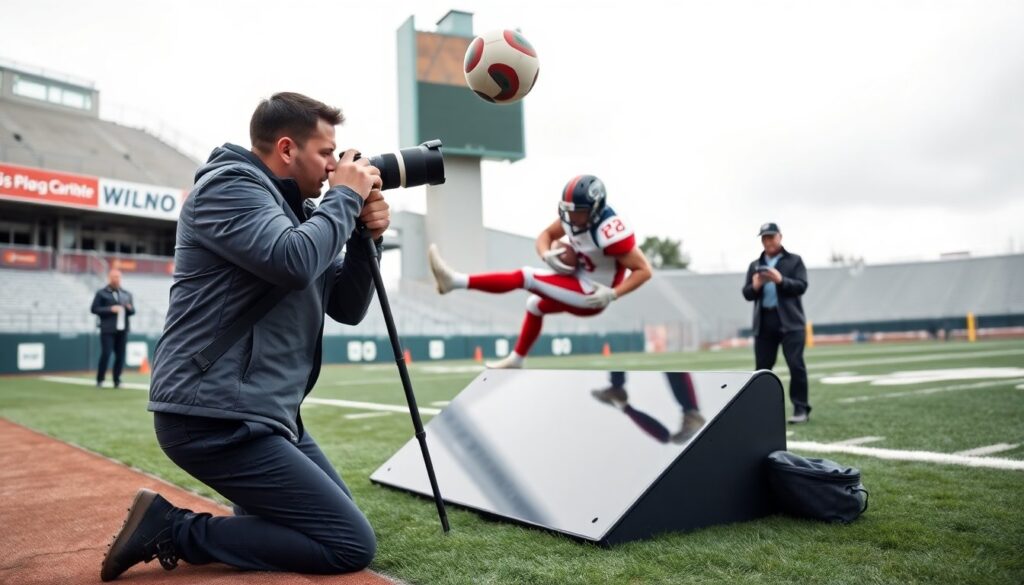
Photography tips fumbleboard help a shooter catch fast moves on the board. The writer explains clear, direct methods to spot action, pick gear, and set the camera. The tips aim to reduce missed frames and improve sharpness. The guide suits photographers who want repeatable results for fumbleboard matches and drills.
Key Takeaways
- Effective photography tips for fumbleboard focus on predicting fast game moments by studying player stance and ball control to capture peak action.
- Selecting fast frame rate cameras with wide-aperture lenses and reliable autofocus ensures sharp fumbleboard action shots.
- Setting shutter speed to at least 1/1000s and adjusting ISO and aperture accordingly helps freeze fast movements without noise.
- Using a monopod and packing extra batteries and memory cards allows uninterrupted shooting during intense fumbleboard matches.
- Composing shots with off-center framing, leaving space in motion direction, and timing for peak moments enhances storytelling in fumbleboard photography.
Read The Game: Predicting Key Moments On The Fumbleboard
Players move, the ball shifts, and the board changes quickly. He watches player stance to predict the next contact. She notes who controls the ball and where pressure will build. They watch foot placement as a cue for sudden moves. The photographer studies patterns across a few plays to learn likely hotspots. He positions near those hotspots to reduce travel time between shots. The shooter times bursts to start just before likely collisions. These steps let the photographer increase keeper frames and reduce missed decisive moments.
Essential Gear For Fumbleboard Action Shots
The photographer chooses a camera with a fast frame rate and reliable autofocus. He picks lenses with wide apertures and fast focus motors. She carries a 70-200mm for reach and a 24-70mm for context. They add a monopod to steady long lenses without losing mobility. The shooter packs extra batteries and high-speed cards to avoid buffer limits. He brings a rain cover for outdoor matches. These items let the photographer work longer and keep shooting during peak action.
Settings For Crisp Action
The photographer sets camera controls to emphasize motion capture and sharp focus. He uses exposure and focus choices that lock on moving subjects and stop blur. She verifies metering and white balance quickly and adapts as light changes. They check histograms to avoid clipped highlights. The shooter reviews images in bursts to confirm sharp frames. He adjusts settings between plays to match speed and light.
Shutter Speed, ISO, And Aperture: Fast-Moving Rules Of Thumb
He sets shutter speed to freeze the motion. She uses at least 1/1000s for fast swings and 1/500s for moderate moves. The photographer raises ISO when light drops to keep shutter speed high. He opens aperture to let light in and create subject separation. She balances aperture to keep the main subject in focus. They avoid overdoing ISO to prevent heavy noise. These rules let the camera make clean, sharp frames under varied light.
Composition, Framing, And Timing For Maximum Impact
The photographer frames tight for emotion and wide for context. He places the subject off-center to add motion tension. She leaves space in front of a moving player to show direction. They vary angles to capture different story beats. The shooter times frames to peak action, like contact or a missed catch. He blends freeze frames with reaction frames to give editors options. These choices help the photographer create images that clearly show the play and the result.