

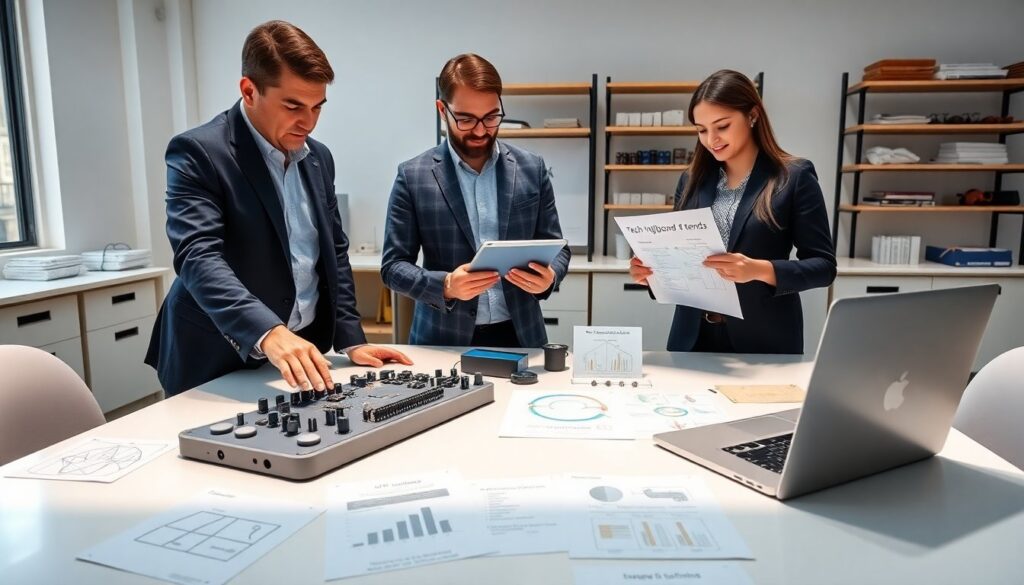
Tech fumbleboard trends appear across consumer and enterprise products in 2026. Analysts track this shift because fumbleboards change how people touch, control, and collaborate. The trend favors physical interfaces that blend tactile feedback with simple digital rules. Observers note faster prototyping cycles and lower entry costs. Companies test fumbleboards in retail, education, and health to see user engagement and task speed.
Key Takeaways
- Tech fumbleboard trends in 2026 highlight a shift towards physical interfaces combining tactile feedback with simple digital commands for faster, more precise user interactions.
- Standardized protocols and APIs are reducing integration complexity, enabling quicker pilots and wider adoption of fumbleboards across industries like retail, education, and healthcare.
- Advancements in haptic micro-actuators and edge AI enhance user experience by providing clear feedback and personalized responses while maintaining data privacy.
- Manufacturers benefit from using common components and modular designs to lower costs and accelerate iteration cycles in fumbleboard production.
- Security measures such as encryption, authentication, and role-based controls are critical to prevent misuse of fumbleboards connected to sensitive systems.
- Careful usability testing and staged rollouts are essential to ensure reliable large-scale deployment and minimize operational risks associated with tech fumbleboard trends.
What Is A Fumbleboard And Why It Matters Now
A fumbleboard is a physical control surface that links simple gestures to digital commands. Designers craft fumbleboards with knobs, sliders, pads, or soft buttons. Engineers pair sensors and microcontrollers to read touch and motion. Developers map those inputs to actions in software. The device lets people perform complex sequences with fewer steps. The phrase “tech fumbleboard trends” describes how firms adopt this hardware-plus-software pattern.
Users prefer fumbleboards when tasks require speed or precision. In retail, staff use fumbleboards to complete checkout flows faster. In classrooms, teachers use fumbleboards to run interactive lessons without menus. In production, technicians use fumbleboards to set machine states quickly. Researchers measure lower error rates and faster task completion in those settings.
Manufacturers reduce cost by using common components. Makers use off-the-shelf sensors and 3D-printed housings. This choice drops unit price and speeds iteration. Companies release modular designs so teams can swap parts and test new layouts. That flexibility fuels more experiments and higher adoption.
Investors view tech fumbleboard trends as a sign of broader shift. They see hardware moving closer to software experiences. They fund startups that show clear use cases and measurable gains. That funding pushes product roadmaps and market trials.
Three Breakthrough Trends Driving Fumbleboard Adoption In 2026
Trend 1: Standardized protocols lower integration work. Companies publish simple APIs and communication formats for fumbleboards. Platform teams then connect fumbleboards to cloud services and local apps with fewer changes. This standardization speeds pilots and reduces custom code. The phrase “tech fumbleboard trends” appears in many integration guides.
Trend 2: Haptic micro-actuators improve feedback. Engineers add small motors and vibration actuators to give clear touch signals. Users respond better when they feel an event. Designers tune feedback so it confirms actions without distraction. This change raises satisfaction scores and cuts accidental inputs.
Trend 3: Edge AI personalizes responses. Small models run on-device to classify gestures and adapt sensitivity. The models learn from local patterns and keep data off the cloud for privacy. Teams deploy updated models over the air to refine behavior. This approach reduces latency and raises accuracy.
Each trend makes fumbleboards more practical. Together they lower cost, improve experience, and expand use cases. Observers link these advances to the larger set of tech fumbleboard trends that reporters and buyers track. Vendors then highlight benchmarks, case studies, and integration kits in sales materials.
Practical Challenges, Risks, And What To Watch Next
Manufacturers face supply chain limits. Raw material shortages raise lead times for sensors and actuators. Teams then adjust designs to use more common parts. That tactic reduces delays but may change the product feel. Buyers must test prototypes to ensure the final device meets expectations.
Security and privacy pose clear risks. Fumbleboards often sit on local networks and send commands to critical systems. Engineers should encrypt links and require authentication. They should also log actions and enable role-based controls. Those steps cut the chance of misuse.
Usability issues still appear. Poor layout or weak feedback makes users press the wrong control. Designers must run short tests and iterate layouts. They should measure time-to-complete tasks and error rates. That data helps teams pick the best button sizes, spacing, and feedback levels.
Scale poses a rollout risk. A pilot may succeed with ten devices but fail at a thousand. Teams should plan for monitoring, firmware updates, and spare parts. They should stage deployments and measure remote failure rates. That planning lowers operational surprises.
Analysts recommend watching three signals next: adoption in safety-critical fields, emergence of open connector standards, and large vendors adding fumbleboard offerings. Those signals will show whether tech fumbleboard trends move beyond niche pilots into widespread use. Companies that track these signals can decide when to pilot, buy, or build.