

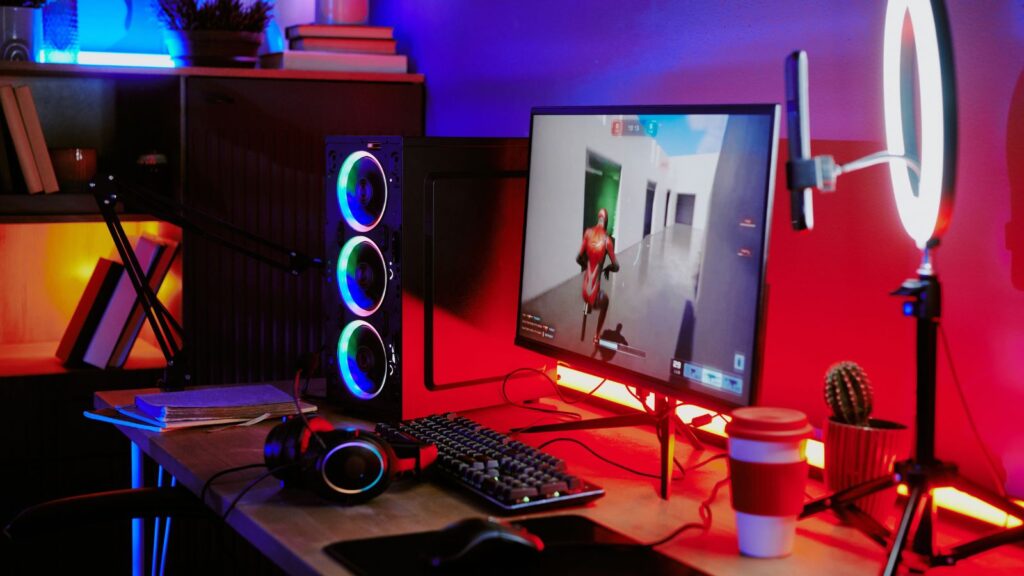
From Highlights to Habit: Streaming as Practice
Streaming can be more than entertainment—it can act like a training log for competitive play. Going live (or recording in a streaming layout) creates a clean timeline of decisions, mistakes, and small wins that are easy to revisit later.
Even with zero viewers, the footage can support focused practice because it shows what actually happened, not what felt like it happened.
In Short: Streaming turns a session into reviewable evidence that can be studied and improved. It also adds structure, which makes it easier to practice consistently.
How Streaming Turns Play Into Feedback
Streaming creates a record that can be paused, rewound, and compared across sessions. A quick reference like the KA Fish Hunter game page can also clarify the basic mechanics and goals to watch for while reviewing your footage. With a clear target, patterns in aim, target choice, and timing become easier to spot.
Narrating choices out loud can sharpen decision-making because unclear thinking shows up immediately in the commentary. A stream also makes it easier to track progress with simple markers, such as “missed openings,” “late rotations,” or “poor reload timing.” Over time, those notes can turn into a checklist that keeps practice sessions focused instead of random.
Reviewing Your Footage Like a Coach
Improvement happens faster when the stream is treated as raw material for analysis, not a highlight reel. A short VOD review after each session can uncover the few mistakes that keep repeating. Using a live streaming encoder can also help ensure reliable, high-quality recordings are available for review, making it easier to identify technical issues and improve future sessions.
Run a Five-Minute VOD Review
Start by scanning for moments that swing outcomes: lost fights, failed objectives, or sudden drops in accuracy. Mark timestamps and write one sentence about the cause, keeping the notes concrete and action-focused.
Turn Notes Into One Practice Goal
Pick a single theme for the next session, such as crosshair placement, peeking timing, or ability tracking. Build one small drill that can be repeated for 10–15 minutes before playing normally.
Stream Settings That Keep Details Clear
Footage only helps if it is readable, so clarity matters more than flashy effects. A stable stream with clear audio makes it easier to judge mechanics, communication, and reaction time.
Small setup choices also reduce excuses during review because the same camera angle and sound mix appear every time. The goal is to capture enough information to explain decisions without distracting from play.
- Video Quality: Keep resolution and bitrate steady so small movements and quick flicks stay visible.
- Input Clarity: Show key inputs or controller buttons if the game allows, so mis-presses can be identified.
- Audio Mix: Balance game audio and voice so callouts, cooldown cues, and footsteps are easy to hear.
- Markers: Use a hotkey or stream marker to flag big moments for later review instead of hunting for them.
- Privacy Check: Hide personal notifications and overlays that do not help analysis.

Handling Chat Without Losing Focus
Live feedback can help, but it can also pull attention away from the game at the worst times. A simple rule is to treat chat like a coach’s notes: useful after the play, not during it. When focus is protected, the stream supports better mechanics and cleaner decision-making.
During high-intensity moments, consider reading chat only between rounds, deaths, or matches. If distractions are common, a short delay or a dedicated “review break” can keep the session on track.
Viewer comments can still become valuable data when they are collected the right way. Save a few recurring suggestions, then check the VOD to confirm whether the feedback matches what happened on-screen. This filters noise and turns outside opinions into practical reminders.
Keep Improving After the Stream Ends
The biggest advantage of streaming is the loop it creates: play, review, adjust, and repeat. Each pass should end with one concrete goal and one simple way to measure it in the next session. That structure makes improvement feel predictable instead of mysterious.
Consistency matters more than length, so short sessions can still work if the review happens afterward. With time, a small library of VODs becomes proof of what is improving and what still needs practice.
In Short: Stream with a purpose, review quickly, and carry one goal into the next session. Small changes compound when sessions are easy to compare.